


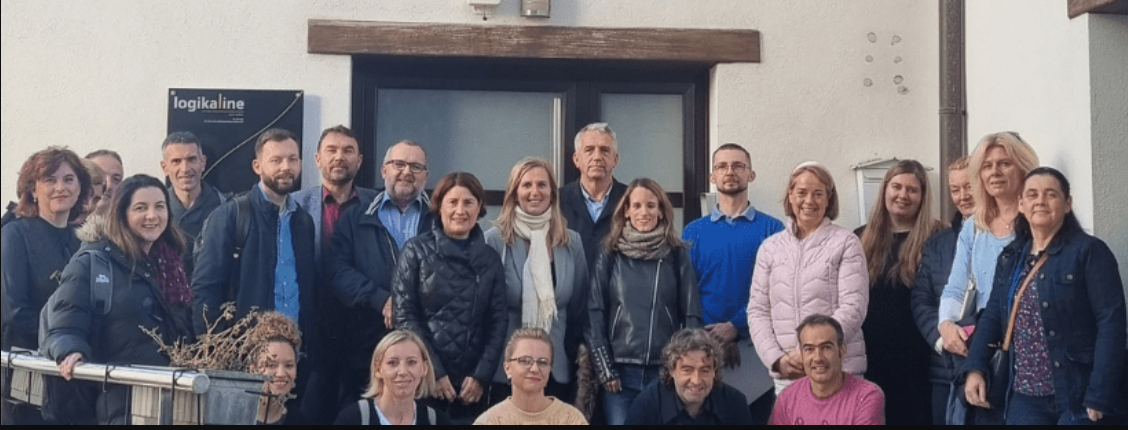
The delegation, led by Maite Peñacoba and Juncal Beltran de Heredia, members of the MENDINET Local Action Group, was made up of around 25 people, including Jone Fernández, Director of Rural Development for the Basque Government. Also present were Imanol Olano and Aitor Usandizaga, members of Tolomendi, Mendinet’s counterpart in Tolosaldea.
The delegation visited Abaltzisketa during their study trip dedicated to analysing and learning about rural development projects promoted by Europe in different rural areas of the Basque Country. They took advantage of the visit to see Logikaline’s facilities and the work carried out at its headquarters, with special emphasis on the technology that makes it possible to provide 24/7/365 customer service.
After an initial meeting, the visitors and some members of Logikaline’s management team, together with the Mayor of Abaltizkseta, Jon Zubizarreta, held a discussion on the innovative lines of development currently being pursued. More specifically, Zubizarreta highlighted the collection of data through sensors currently installed in some areas of the mountain for fire prevention and proper waste management. Abaltzisketa is moving towards a smart village model, similar to towns such as Villanueva de la Serena in Badajoz and Valdepeñas in Ciudad Real.
After the meeting, the delegation headed to Orexa, the penultimate stop on their trip, which will end in Donostia.
A success story and an example of public-private collaboration for Europe
Logikaline was created after an exhaustive feasibility study by Tolomendi, HAZI and the Abaltzisketa Town Council, among other institutions linked to the European Leader Development Programme. Today, almost 25 years after its creation, it remains steadfast in its mission to go beyond economic considerations and focus on caring for and maintaining its cultural and linguistic roots, which are the pillars of sustainability and life in rural areas.